


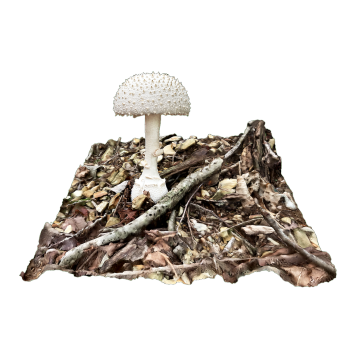
Cone scale white goose paste fungus
Amanita virgineoides Bas, scientific name Amanita virgineoides Bas, is a member of the Amanita family and the Umbrella order. One of the common poisonous mushrooms in Guangdong. Conical scale white Amanita is one of the common poisonous mushrooms in Guangdong. Conical scale white Amanita contains trace amounts of Amanita peptide toxins and grows on the ground in coniferous forests or mixed coniferous and broad-leaved forests in summer and autumn. It may form ectomycorrhiza with Pinus and Fagaceae plants. The cap diameter is 7-15 (20) cm, white, nearly hemispherical when young, with slightly curled edges, flattened to flattened in later stages, and sometimes with upturned edges. There are records that it may be edible, but caution is advised.

Proposed Orange covered Goose Paste
Amanita caesarea (Scop.) Pers. is a fungus belonging to the Amanita family and the Amanita genus. The fruiting body is large, with a fungal curtain when the bacterial cells are young, gradually spreading out, slightly protruding in the middle, bright orange yellow to orange red, and with obvious stripes on the edges. Mushroom meat is white. The gills are yellow, thick, and the stem is cylindrical in shape, light yellow. The upper part of the stem is surrounded by bacteria, light yellow, membranous, and drooping, with fine stripes on top. The bacterial tray is large, white, and the spore print is white. Spores are colorless, smooth, broadly elliptical to ovoid in shape.

Amanita muscaria
It is called toad fungus, fly trap fungus, poisonous fly fungus, and poisonous fly umbrella. The sub entity is relatively large. The cap width is 6-20cm. The edges have obvious short ridges, the surface is bright red or orange red, and there are white or slightly yellowish granular scales. The gills are pure white, dense, free, and of unequal length. The mushroom meat is white and red near the epidermis.

Amanita rubescens
Amanita rubescens (Fries 1821) is a fungus belonging to the Amanita genus in the Amanita family. The gills are white to nearly white, gradually reddish brown, free, slightly dense, and unequal in length. In summer and autumn, it grows alone or sporadically on the ground in the forest. This type is generally edible, but there are also reports of containing hemolytic substances that can be destroyed by heating, so it cannot be eaten raw. The sub entity is of medium size. The cap diameter is 3.5-8cm, flattened to flattened, light soil yellow or light reddish brown, with blocky and nearly warty scales, and indistinct stripes on the edges.
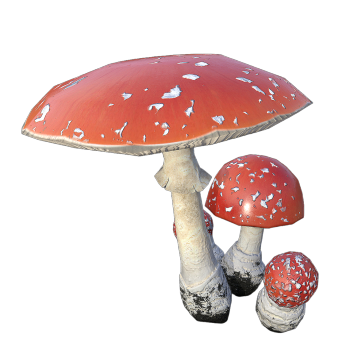
Poison fly umbrella at different growth stages
Amanita muscaria, also known as fly agaric or fly amanita, is a neurotoxic fungus in the Basidiomycota phylum, classified as a species of the Amanita genus in the Amanita family. The growth environment of the poisonous fly umbrella covers temperate and polar regions in the northern hemisphere, and has unintentionally expanded to the southern hemisphere, coexisting with pine trees and other plants in pine forests. It has now become a global species. The poisonous fly umbrella forms mycorrhizae with deciduous plants and fruit bearing plants.

Poison fly umbrella
Amanita muscaria, also known as fly agaric or fly Amanita, is a fungus of the Basidiomycota phylum and one of the Amanita genera that contains neurotoxic effects. The fruiting body of the fungus is relatively large. The cap width is 6-20cm. The edges have obvious short ridges, the surface is bright red or orange red, and there are white or slightly yellowish granular scales. The gills are pure white, dense, free, and of unequal length. The mushroom meat is white and red near the epidermis.

Poison fly umbrella
Amanita muscaria, also known as fly agaric or fly Amanita, is a fungus of the Basidiomycota phylum and one of the Amanita genera that contains neurotoxic effects. The fruiting body of the fungus is relatively large. The cap width is 6-20cm. The edges have obvious short ridges, the surface is bright red or orange red, and there are white or slightly yellowish granular scales. The gills are pure white, dense, free, and of unequal length. The mushroom meat is white and red near the epidermis.

Poison fly umbrella variant guessowii
A variant of the Poison Fly Umbrella, Guessowii, has a yellow to green surface and an orange or even dark orange center.

Poison fly umbrella
Amanita muscaria, also known as fly agaric or fly amanita, is a neurotoxic fungus in the Basidiomycota phylum, classified as a species of the Amanita genus in the Amanita family. The growth environment of the poisonous fly umbrella covers temperate and polar regions in the northern hemisphere, and has unintentionally expanded to the southern hemisphere, coexisting with pine trees and other plants in pine forests. It has now become a global species. The poisonous fly umbrella forms mycorrhizae with deciduous plants and fruit bearing plants.

Popular Models
Honey Badger (3D animated model)
199 View
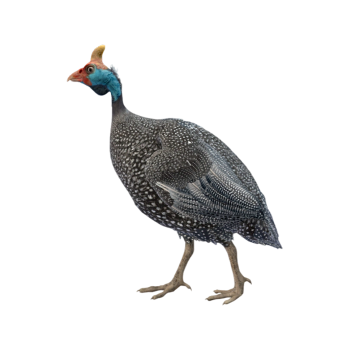
Guinea fowl (3D animated model)
168 View
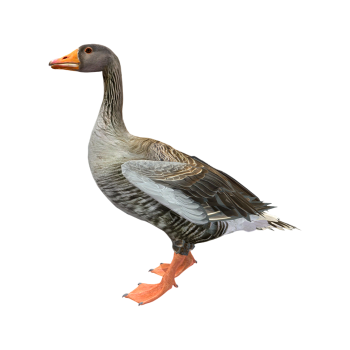
Wild Goose (3D animated model)
190 View
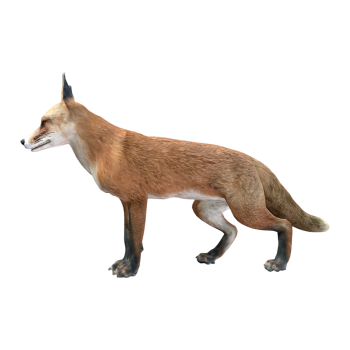
Red Fox (3D animated model)
158 View
Random Model


Pine ball fish
824 View


Large outdoor distribution box
760 View

Fine-mouthed light-lip fish specimen
649 View
